

Different Renton buyers need different first pages
The city’s business resources describe professional services, healthcare, and manufacturing, including aerospace activity around Boeing’s Renton assembly operation. Its site selection guide also identifies Downtown retail and other commercial locations. These facts support different hypothetical buyer journeys, not any claim that Galactic has served Boeing or its suppliers.
A storefront site may lead with location, hours, products, and pickup. A provider may need service area, qualifications, and appointment terms. A technical company may need capability pages, materials, certifications supplied by the business, and an inquiry path suited to detailed specifications.
Galactic Digital Studios builds responsive sites with direct headings, useful internal links, and forms that reflect the actual first step. The business approves all claims and owns updates to changing information.
Give each service or capability a clear page role
Give each page a job. A visit page can answer where and when. A service page can define scope and exclusions. A technical capability page can explain supported applications, requirements, and the safe first step for a project inquiry. Avoid repeating one broad promise across many shallow pages.
A Renton services overview can connect digital and design needs. On a customer site, descriptive links should move a person from summary to the relevant detail and then to an action. Avoid producing many shallow pages that repeat the same promise.
Forms should request enough context for a useful first reply without forcing a visitor to complete a long application. A quote request is not a confirmed order. Labels and confirmation messages should reflect the actual business process.

Scope the site around reliable information
Before comparing estimates, list current content, important URLs, source documents, forms, and integrations. A manufacturer may need someone to validate specifications and confidentiality limits. A local provider may need a clear coverage boundary and update routine. A retailer may need staff access to hours and stock guidance.
Inventory current pages, booking tools, forms, downloads, imagery, and third-party listings. Decide which old URLs need redirects and who will approve new wording. If hours, offerings, or availability change, agree whether staff can edit those fields directly. A design that depends on a developer for every routine update can become inaccurate quickly.
Ask proposals to name page types, content work, integrations, account ownership, analytics access, testing, and handoff. Cost and timing depend on those details, as well as approval speed and the condition of existing material. A phased project can complete the essential visit or inquiry route first, then add detail when real customer questions justify it.

Give each audience a direct route
We map the route from search to action. A shopper may lead with visit details; a healthcare-adjacent service may need eligibility and appointment rules; a supplier may lead with capabilities and qualification. Clear headings and factual copy do the work. The generic aircraft in our illustration is conceptual art, not evidence of a Boeing project.
Build with readable HTML, a clear heading hierarchy, descriptive page titles, useful internal links, responsive layouts, and images sized for the device. Google states that its established SEO guidance applies to AI features as well. Those practices help pages be understood and used, but they cannot secure a ranking, citation, booking, or lead count.
Check the actual mobile flow: can a person find the service, read its limits, and complete the form without zooming or losing context? If accessibility, parking, transit, or meeting location details are relevant to the business, put accurate information near the action. Do not assume that every customer knows Renton or arrives by the same route.

Let’s map the Renton buyer questions your website should answer before an inquiry.
Make a booking or inquiry mean what it says
Make the form’s meaning explicit. A request is not a confirmed order, appointment, or quote. Ask for only the details staff need for triage. If drawings, health information, or proprietary specifications require a protected exchange, explain the next step without collecting them through a general public form.
Collect only what staff need for a useful first reply. A visitor-facing service might ask for date range and party size. A local provider might ask for service location and a short description. Explain limitations that affect fit before the form, not after a customer has invested time in it.
Review inquiries after launch. If people repeatedly ask whether a service reaches their neighborhood, improve the coverage explanation. If they ask whether pickup is available during a busy period, update the relevant visit page. Assign an owner to hours, service boundaries, and third-party listings so the same facts appear everywhere.
When the same facts appear on booking platforms, social profiles, and the website, assign an owner to keep them aligned. Disagreement between channels can erode trust faster than modest visual flaws. Link changing details to a maintained source rather than letting old PDFs circulate indefinitely.
Launch after the real journey works
Discovery collects the offer, current site, typical questions, and business goals. Planning defines visitor routes and content ownership. Design applies the visual direction to actual copy. Development connects navigation, forms, and any agreed integrations. Review checks factual details, links, accessibility, responsive behavior, and form delivery before launch.
The business confirms service claims, pricing rules, availability, images, and policies. A designated reviewer can consolidate feedback. Schedule follows content readiness, integration access, and approval dependencies; the same deadline cannot be promised for every scope.
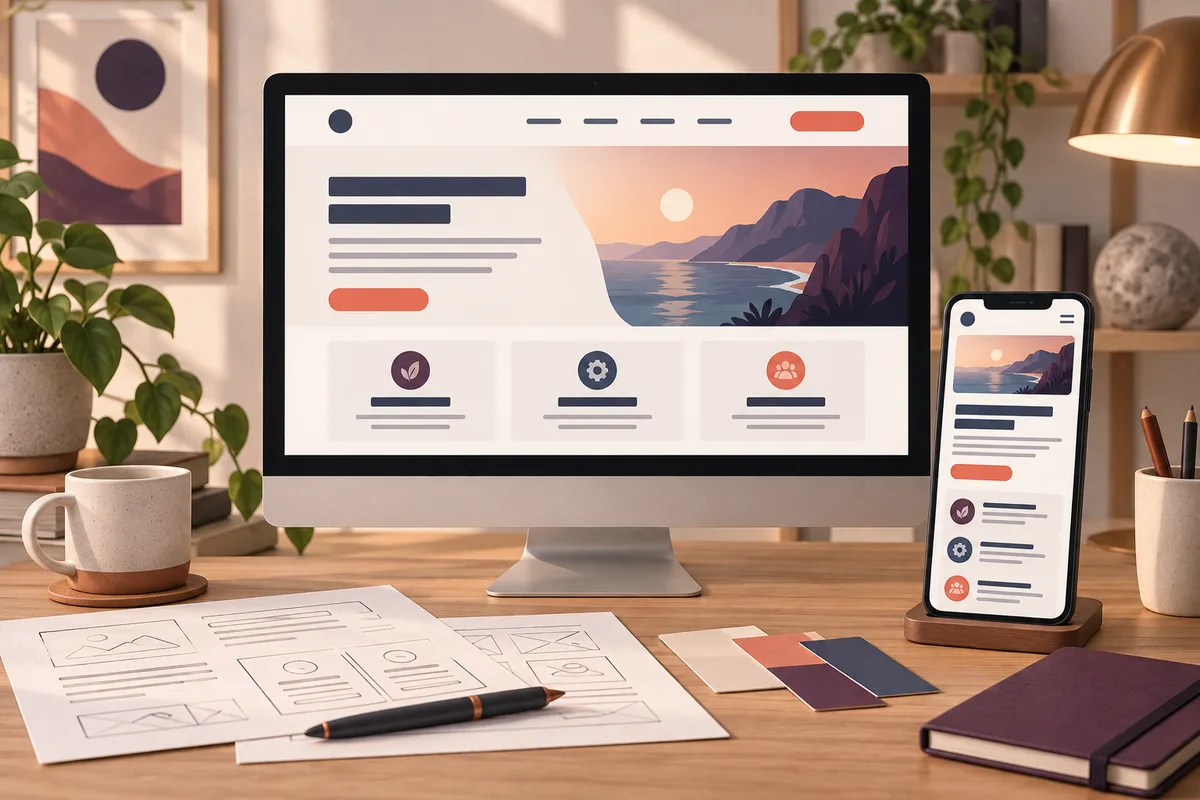
Handoff should identify where approved credentials live, who edits routine content, and how issues are reported. The portfolio websites on this page demonstrate presentation choices, while the responsive concept illustration is AI-generated. None of those examples represents an established Renton client result.
Use completed sites to frame your requirements
The Galactic portfolio includes Utah Roaster Pigs, RSQ Tag, The Silver Guardian, and Salt Lake City Diamonds websites. These are completed examples, not Renton commissions or verified traffic results. They can help discuss page hierarchy and presentation.
Ask what your team must edit and what customers compare. A useful pattern from one site may need to change for a different offer. Our studio background gives additional context.
If the website needs a matching capabilities sheet or visual identity, explore Renton graphic design and Renton logo design. The Kent web page and service areas directory offer regional context.
Questions about web development in Renton
Can an existing Renton site be improved?
Often. Review structure, content, technical condition, and editing needs before deciding between focused changes and a rebuild.
What should we prepare?
Bring current pages, approved imagery, service facts, capability details, recurring questions, and account access. Name the factual approver.
Will it work on phones?
Responsive behavior should be planned and checked on actual pages, navigation, and forms at small widths.
Can our team edit it?
Agree on editing access, guidance, account ownership, and which changes need developer support.
How long does a build take?
Timing follows page count, content readiness, integrations, and review. A project-specific schedule is more reliable than a generic promise.
Ready for a useful next step?
Build a website that leads to a better first conversation.
Tell us what customers need to understand and where your current materials fall short. We can discuss a focused scope for your Renton business and the information needed to begin.
Discuss your Renton project